Competitive landscape.
Four threat vectors, nine competitors, and one honest question: what can Norton do that none of them can copy? This is the context the sprint is designing against.
How well does each competitor serve Laura?
Scored 0–100 on how well each product fits Laura's mindset — passive protection, household framing, zero jargon, no mental load. Not a security feature score. A Laura score.
Tap any competitor to see what, if anything, it actually solves for Laura.
The four competitive lanes.
Norton has historically owned one lane — traditional specialists. The sprint must answer all four simultaneously, or cede ground to players who are moving faster on the others.
Big Tech is absorbing the category.
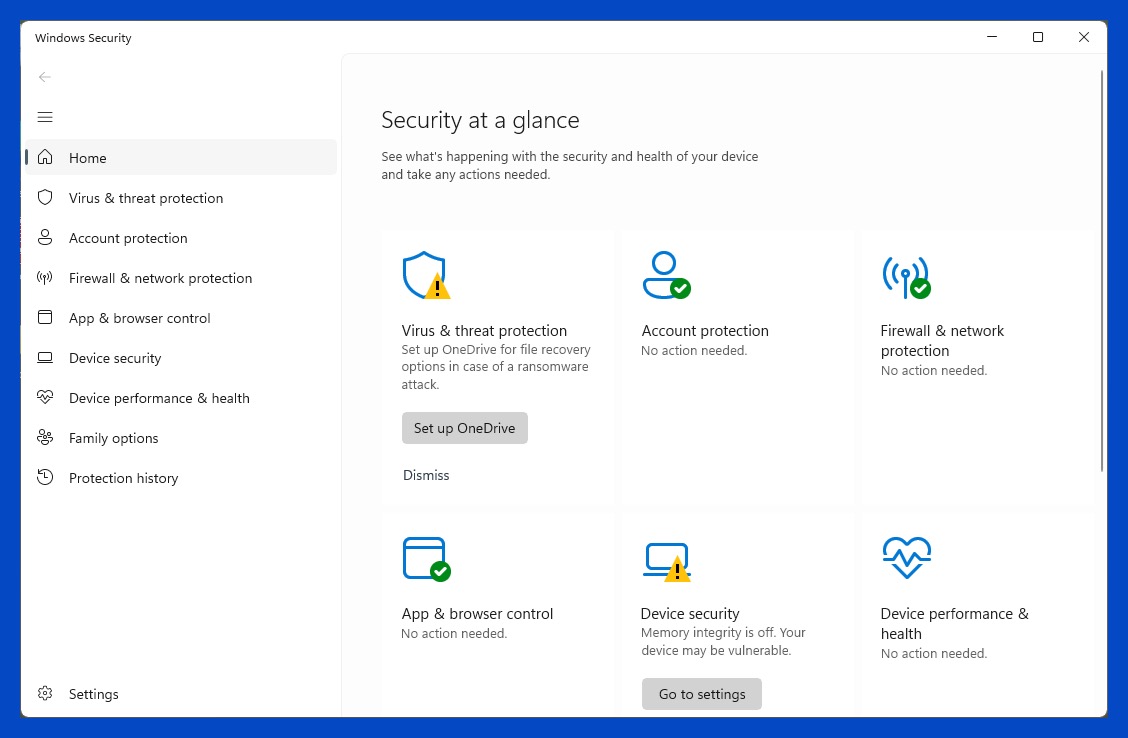
Windows Security dashboard full of toggles — family protection lives three clicks deep, and there's no morning brief telling Laura what changed.
Source: PCMagZero-friction activation — no setup, no subscription prompt. The benchmark for "it just works."
Windows-only. No cross-device household coverage. No identity layer. No iOS. Laura has an iPhone.
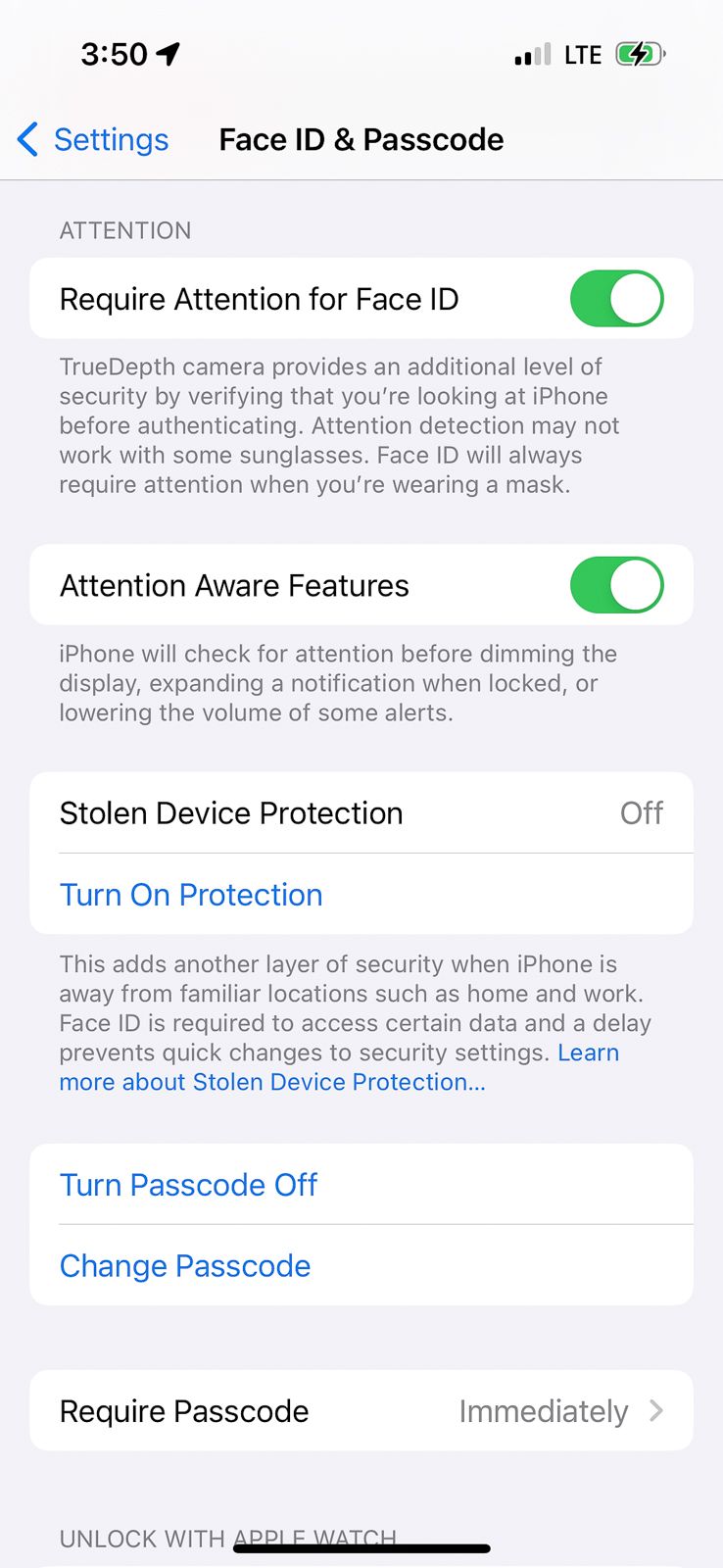
Stolen Device Protection modal: beautiful, but assumes every device in the house wears an Apple logo.
Source: Pocket-lintPrivacy as a brand posture, not a feature. "Private by design" is something Apple owns emotionally — and Norton should own operationally.
Apple-only. A family with mixed devices (Android kids, Windows PC, iPhone mom) falls through completely. No identity protection. No cross-platform household brief.
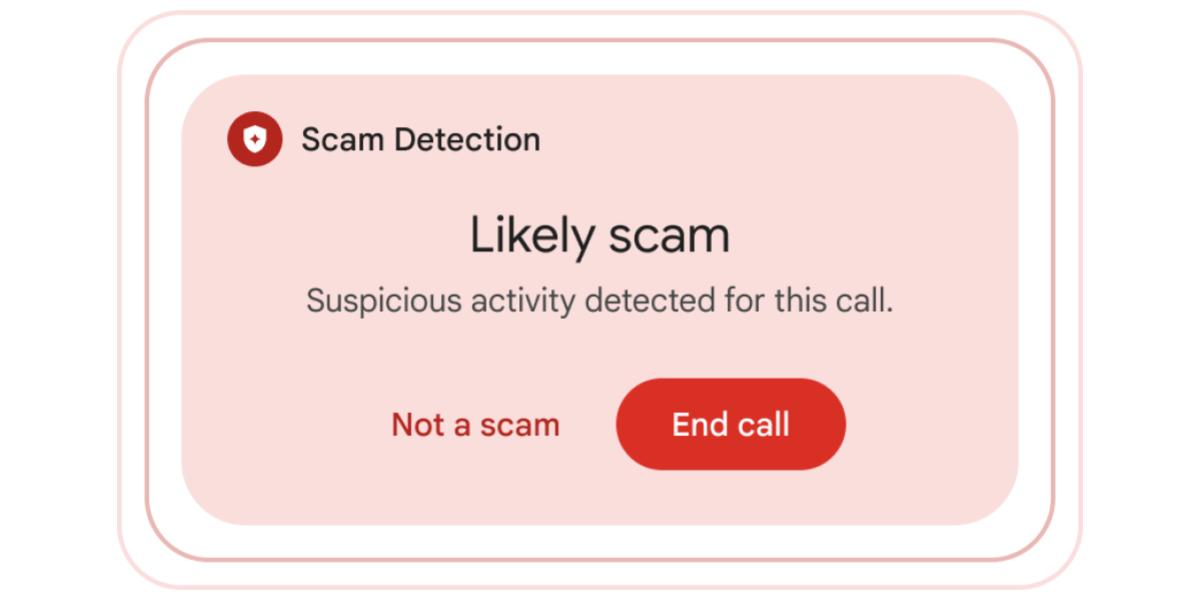
Android scam call pop-up — powerful, but tied to the Pixel dialer. Nothing for the rest of the household.
Source: 9to5Google / GoogleReal-time AI scam flagging in native apps — especially the phone call interception UX. The bar for "AI-native protection" is here.
Android-only scam features. No identity protection. No household management. Privacy posture is complex and trust is fragile (data collection concerns).
Same category, different positioning.
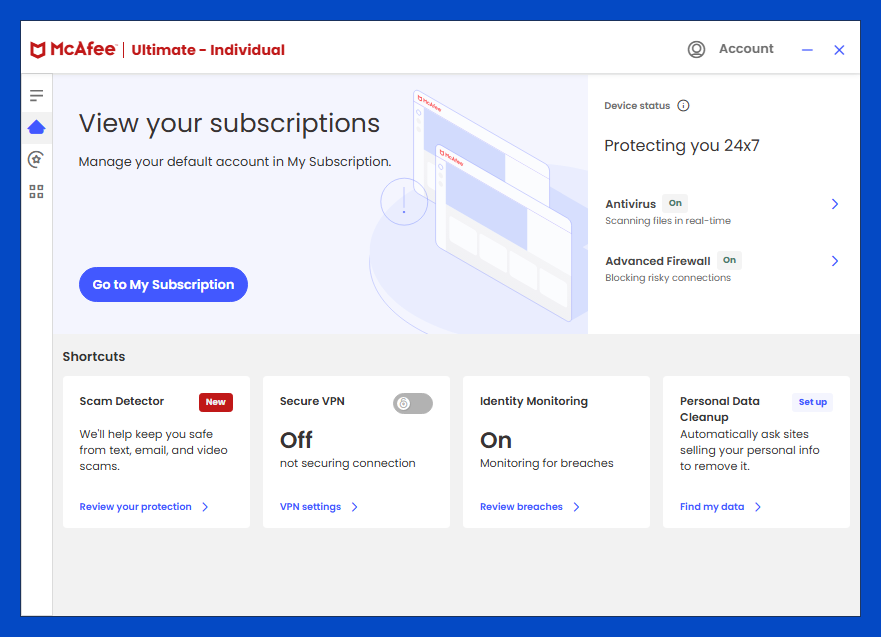
Household onboarding wizard: five steps, twelve toggles, and a router-style UI that scares Laura away.
Source: PCMag"Your whole family" messaging done simply. McAfee lands household framing more cleanly than Norton does today — without the complexity.
No LifeLock equivalent. Identity monitoring is weaker. Brand trust recovery still ongoing post-founder controversy. No agentic AI layer.
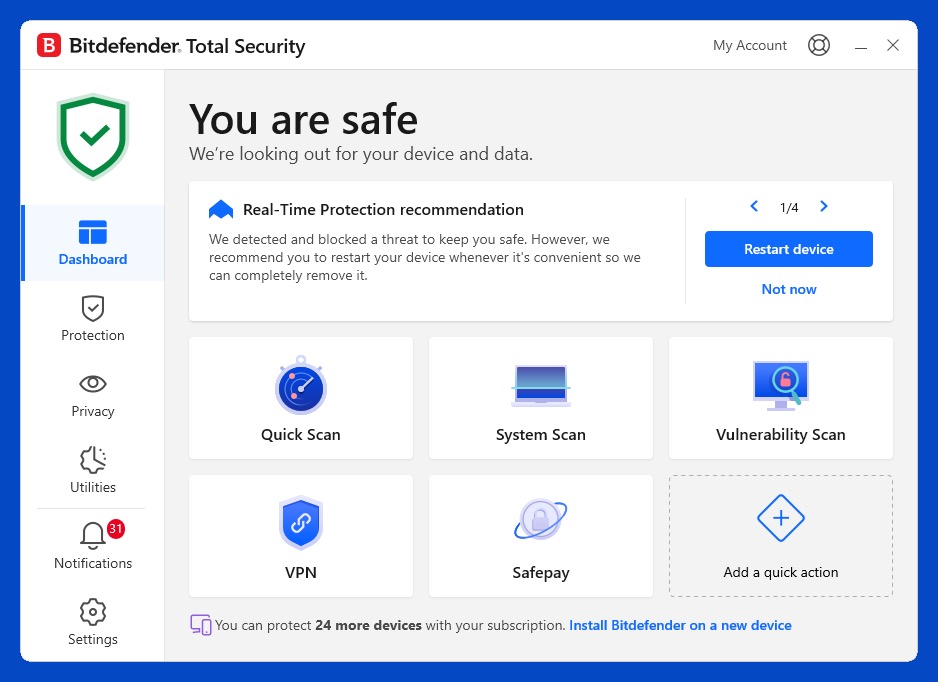
Bitdefender dashboard — dense charts and threat counters. Great for engineers, overwhelming for Laura.
Source: PCMagDetection accuracy narrative — "blocked before it reached you" is a story Bitdefender tells well at the technical level. Translate it for Laura.
Zero household framing. No identity layer. Scam Copilot is reactive, not proactive. UI designed for IT professionals, not parents.
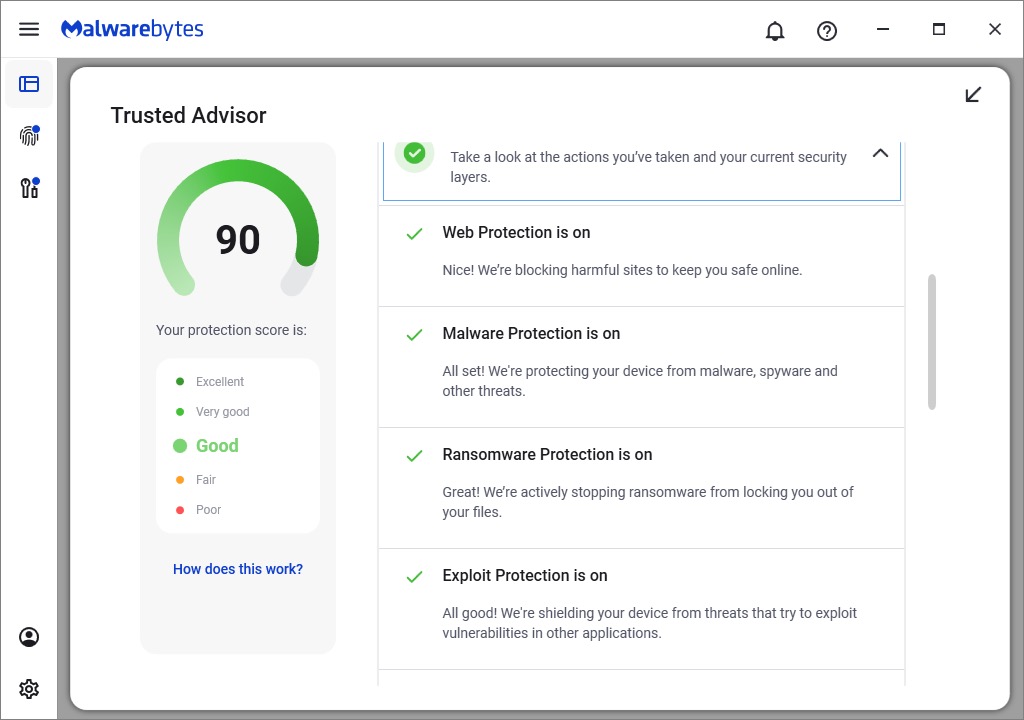
Scan results pane screaming red after the fact. Zero anticipation, all remediation.
Source: PCMagNothing directly useful for Laura's design. Their "clean up the mess" framing is the exact opposite of the quiet guardian Norton Reimagined should be.
Reactive by design. No household tools. No identity layer. No AI-proactive play. Laura would never find them.
Gaining fast on the metrics that matter.
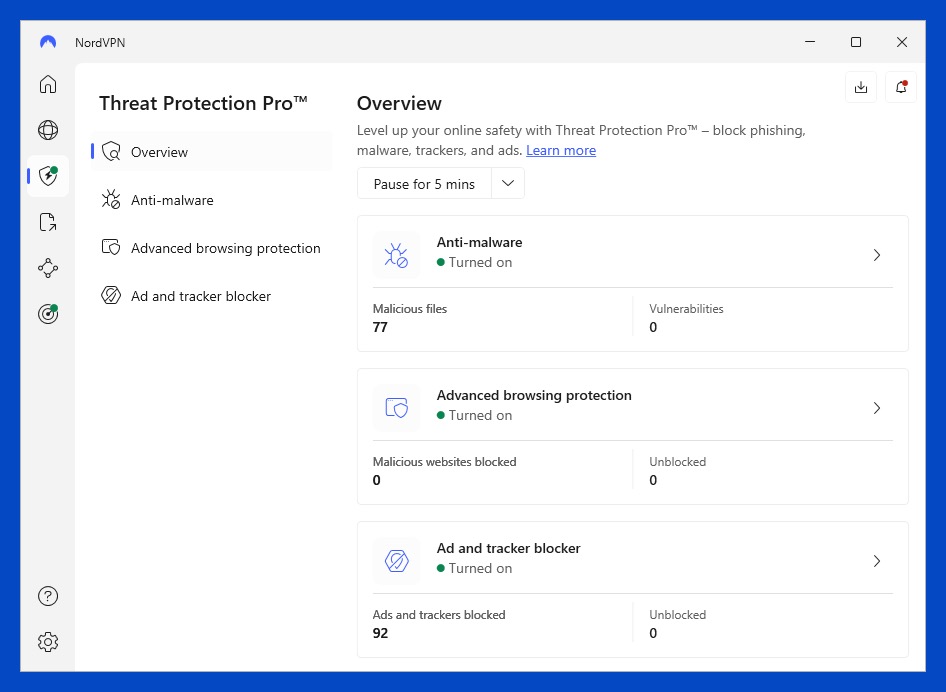
NordVPN home screen — fast tunnel switching, latency graphs, privacy stats. Loved by tinkerers, not by parents.
Source: PCMagExperience obsession — NordVPN proves you can win on product quality even without brand heritage. Every flow is frictionless. The bar for delightful security UX.
No identity protection equivalent. No family/household management. Technical user base — Laura doesn't know VPN. No proactive AI guardian play.
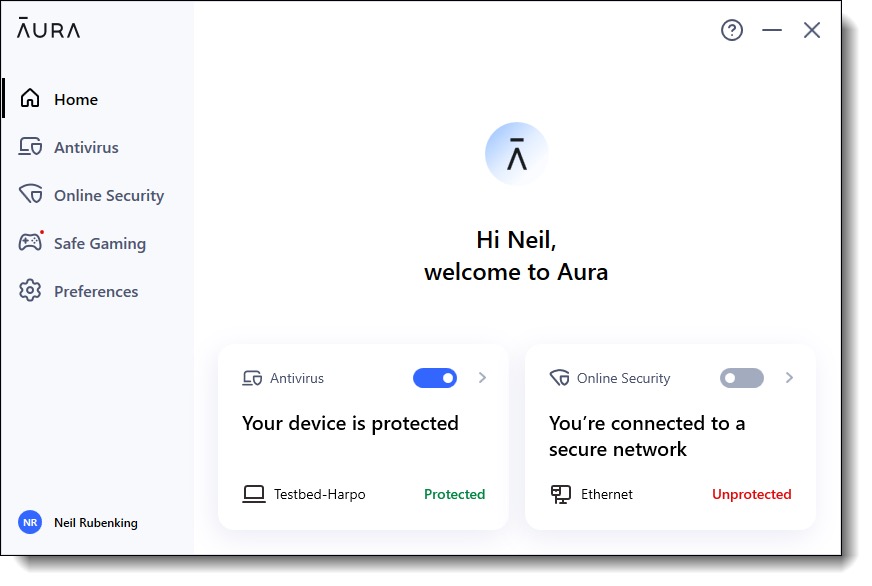
Aura family dashboard — identity cards alongside financial alerts. Closest to the Norton Reimagined feel, but still manual.
Source: PCMagAll-in-one household narrative — single dashboard, one price, every family member. This is the positioning Norton Reimagined must own and out-execute.
30 years less brand equity than Norton. LifeLock identity depth is stronger. NeoClaw AI agents are a structural advantage Aura can't replicate quickly. No 87M partner channel.
Cybersafety without brand recognition.
The channel threat Norton can't outspend.
McAfee is pre-installed on HP and Dell laptops. Bitdefender is embedded in Netgear routers. F-Secure runs inside AT&T's network protection product. Array Networks lives inside Bank of America. These products reach Laura without her ever choosing them — no brand consideration, no app store, no subscription decision.
The sprint doesn't need to solve this — but every concept we build should work in addition to or in replacement of these invisible embedded tools, not alongside them as yet another product to manage.
What each player actually covers.
Mapped against the capabilities Laura actually needs. Yellow = Norton. Green = has it. Partial = limited or add-on required.
| Capability | Norton (Today) | McAfee+ | Bitdefender | NordVPN | Aura | Microsoft | Apple/Google |
|---|---|---|---|---|---|---|---|
| Antivirus / malware | ✓ | ✓ | ✓ | ~ | ✓ | ✓ | ~ |
| VPN | ✓ | ✓ | ✓ | ✓ Best-in-class | ✓ | ✗ | ✗ |
| Identity theft protection | ✓ LifeLock | ~ Limited | ✗ | ✗ | ✓ | ✗ | ✗ |
| Dark web monitoring | ✓ | ✓ | ~ | ✗ | ✓ | ✗ | ✗ |
| Parental / family controls | ✓ Norton Family | ✓ | ~ | ✗ | ✓ | ~ Family Safety | ✓ Screen Time |
| AI scam detection | ✓ Genie | ~ Limited | ~ Scam Copilot | ~ Threat Protection | ✓ | ~ Edge only | ✓ Native (calls) |
| Cross-device household | ✓ Up to 10 | ✓ | ~ Limited | ~ 6 devices | ✓ | ✗ Windows only | ✗ Platform only |
| Financial monitoring | ✓ Norton Money | ~ | ✗ | ✗ | ✓ | ✗ | ✗ |
| Agentic AI (autonomous tasks) | ✓ NeoClaw | ✗ | ✗ | ✗ | ✗ | ~ Copilot (limited) | ~ Apple Intelligence |
| Proactive household brief | ✗ Not yet | ✗ | ✗ | ✗ | ✗ | ✗ | ✗ |
What only Norton can do.
Five things no competitor can replicate in 12 months.
1. LifeLock + Norton 360 under one roof. The only player that has both best-in-class antivirus and best-in-class identity protection. Aura is trying to build this. Nobody else is close.
2. NeoClaw. A security-first agentic AI platform that can act autonomously on Laura's behalf. No competitor has this. Google and Apple have AI but it's platform-native and siloed. This is the infrastructure for a genuinely new category: AI-fiduciary security.
3. 30 years of threat intelligence. The training data advantage is structural. NeoClaw agents trained on three decades of real threat data, across 500M+ devices, can detect and respond to threats that newer models haven't seen.
4. Cross-platform household coverage at scale. iOS + Android + Windows + Mac, up to 10 devices, all family members. No Big Tech player can do this across ecosystems. NordVPN is capped at 6. Aura is trying. Norton already has it.
5. 87M partner channel. Bank partnerships, OEM deals, telco embed — distribution at a scale that a startup challenger cannot buy. Every concept we build should assume this reach.
The sprint design brief, in one sentence: Build concepts that combine LifeLock + NeoClaw + household framing into experiences Laura would adopt passively — making the most defensible competitive moat also the most visible product story.